Tour

Every screen, in light and dark.

Each image below is a real capture of CARA running locally against a fictional portfolio for StrataForge Robotics, a made-up company. The profiles are rows written from fictional documents, cards, and decisions, after CARA's own check kept every quote, and the conversation replies are recorded text: no model was called and nothing was spent. Switch the site theme and the screenshots follow.
Illustration: a long, quiet arcade of identical empty reading alcoves, each with a plain wooden bench and one small wall lamp, receding along a polished stone floor.

Desk

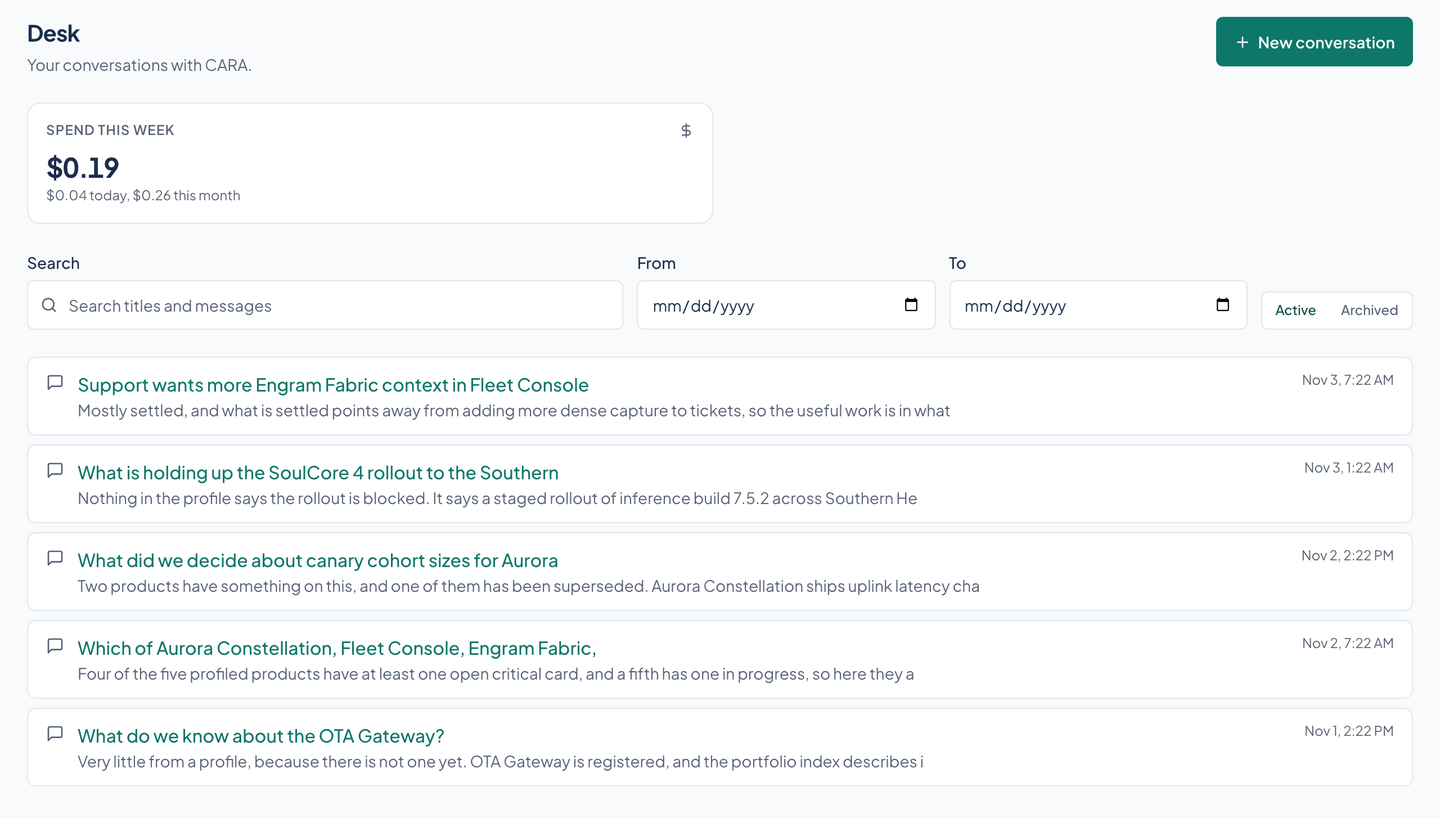
CARA's Desk: a spend card and a list of five conversations, each with its title, the start of the reply, and a date.CARA's Desk: a spend card and a list of five conversations, each with its title, the start of the reply, and a date.
Your conversations, newest first, with search, a date range, and spend today, this week, and this month.

A cited conversation

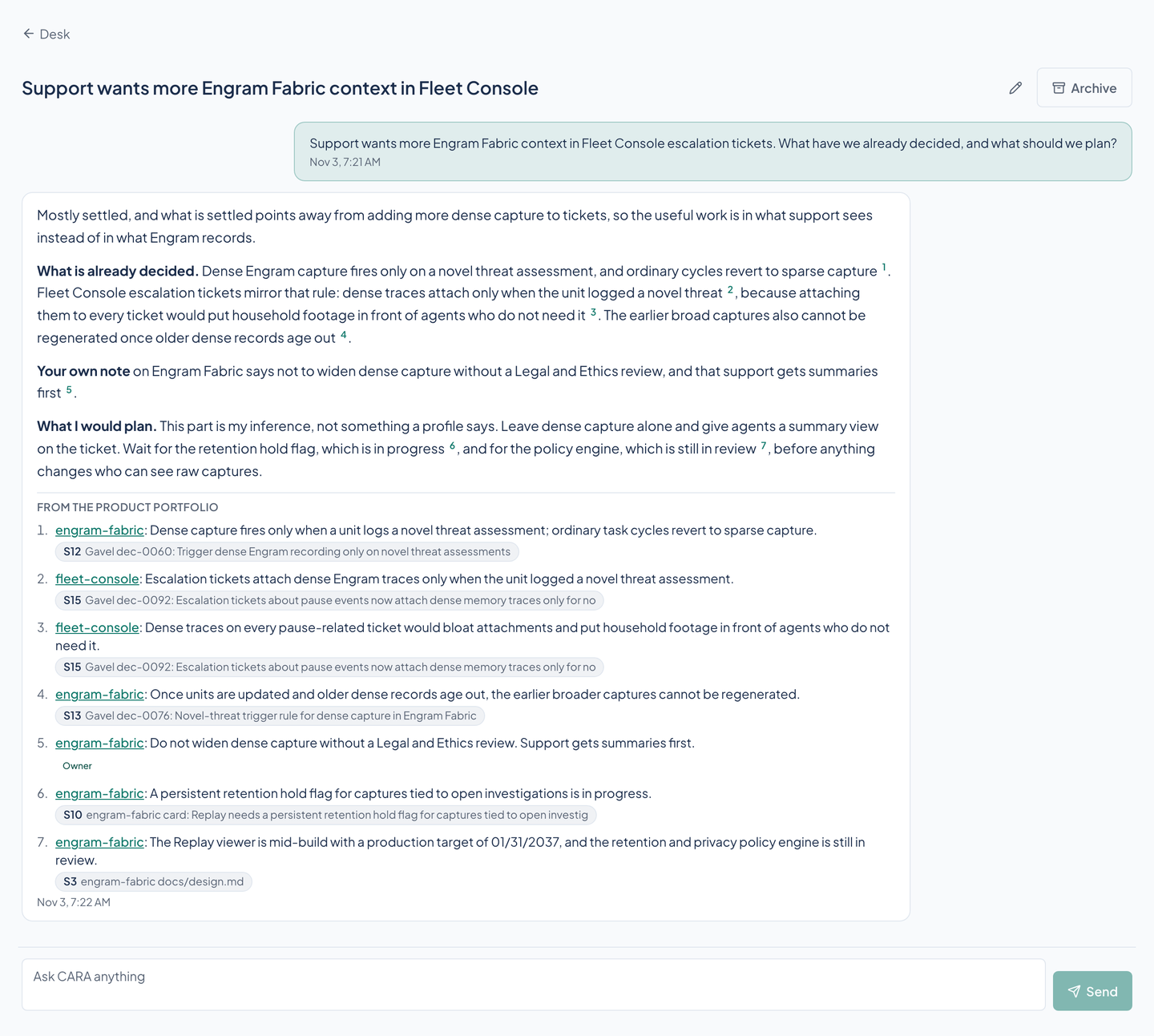
CARA's conversation page with a streamed answer about Engram Fabric and Fleet Console, and seven numbered claims listed beneath it.CARA's conversation page with a streamed answer about Engram Fabric and Fleet Console, and seven numbered claims listed beneath it.
The answer's claim markers become a numbered list: the product, the claim, the source it cites, and an Owner badge on the claim written by the person asking. Enlarge to see the full screen.

A product with no profile

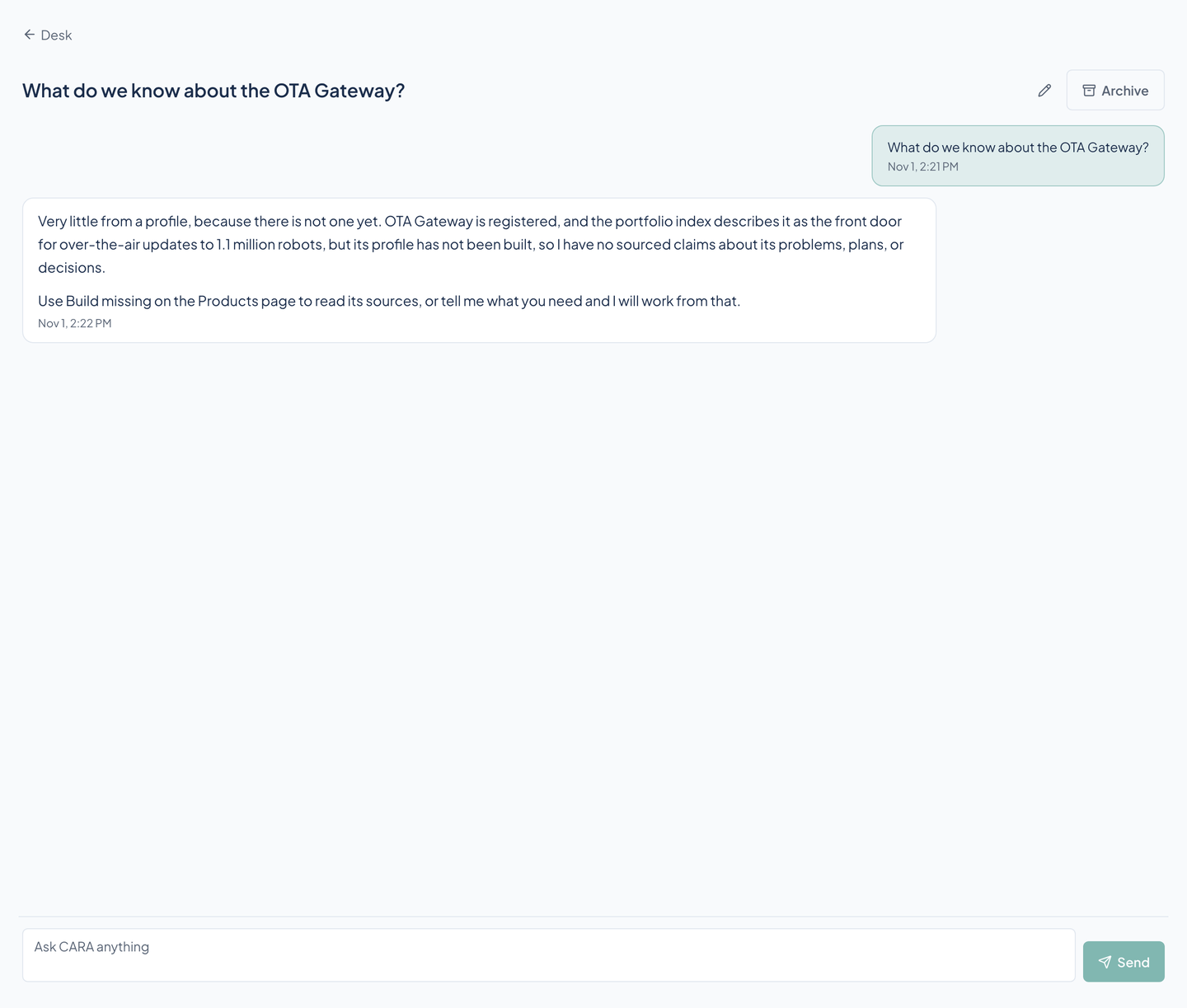
CARA's conversation about the OTA Gateway: the answer says there is no profile yet.CARA's conversation about the OTA Gateway: the answer says there is no profile yet.
When CARA has nothing sourced, it says so and cites nothing.

Products

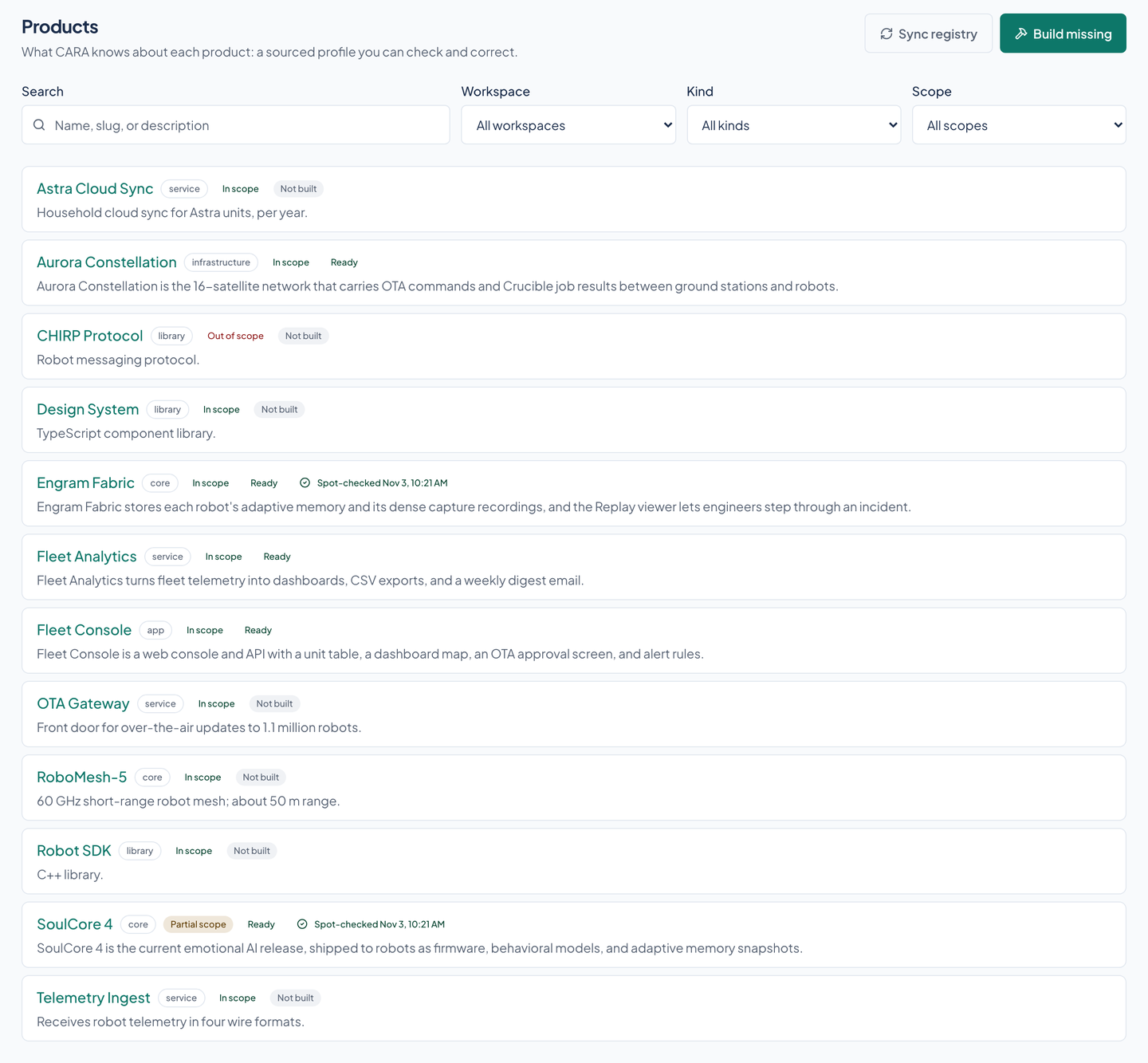
CARA's Products page with twelve products and their kind, scope, and build status.CARA's Products page with twelve products and their kind, scope, and build status.
The registry: kind, scope, and profile state for each product, with filters and a spot-check mark.

A product profile

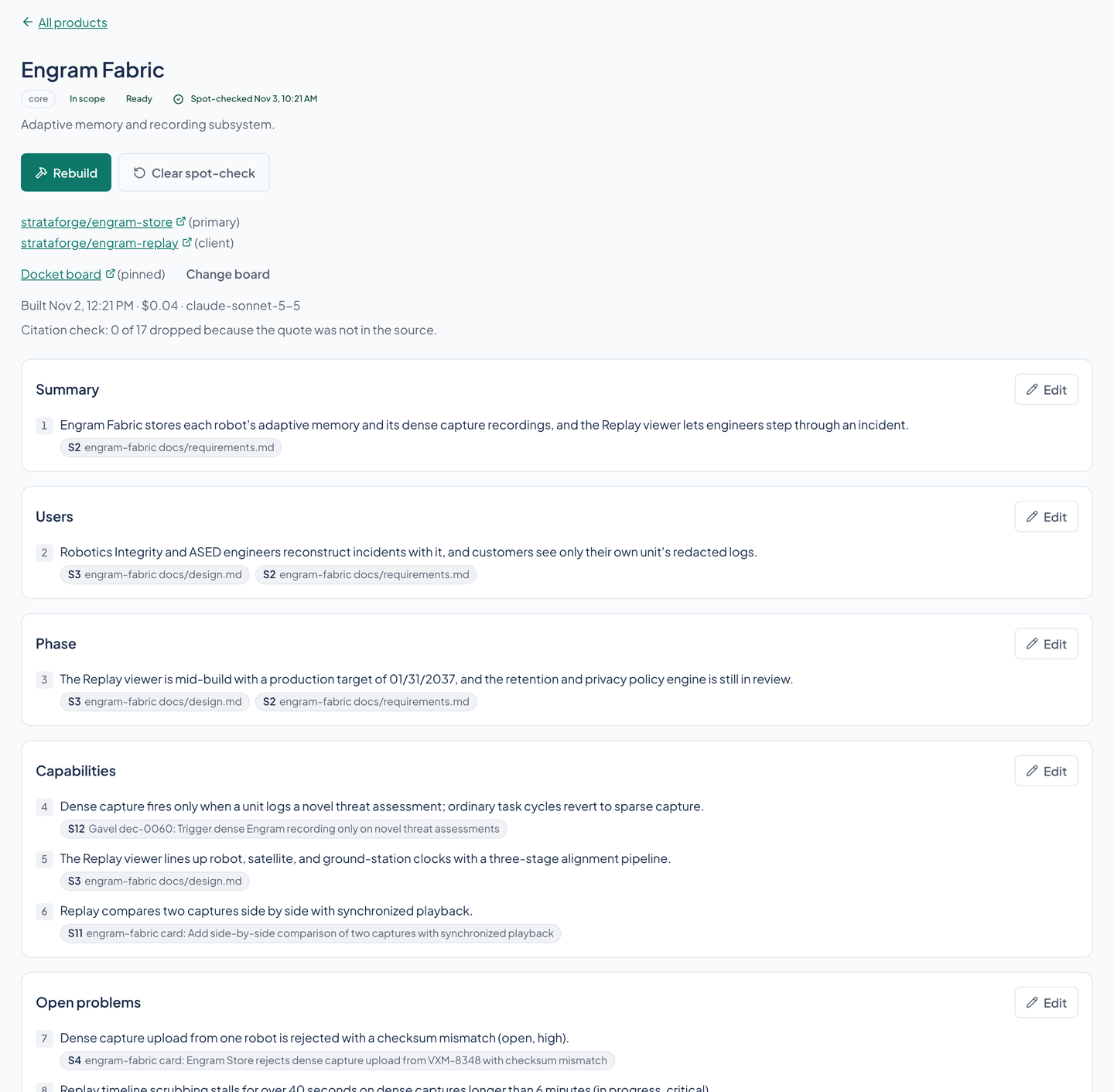
A CARA product profile for Engram Fabric: repositories, a citation check, and the Summary, Users, Phase, Capabilities, and Open problems sections.A CARA product profile for Engram Fabric: repositories, a citation check, and the Summary, Users, Phase, Capabilities, and Open problems sections.
Numbered claims with the source chips they cite, and the citation check's result. Enlarge to see the full screen.

Planned, decided against, and your notes
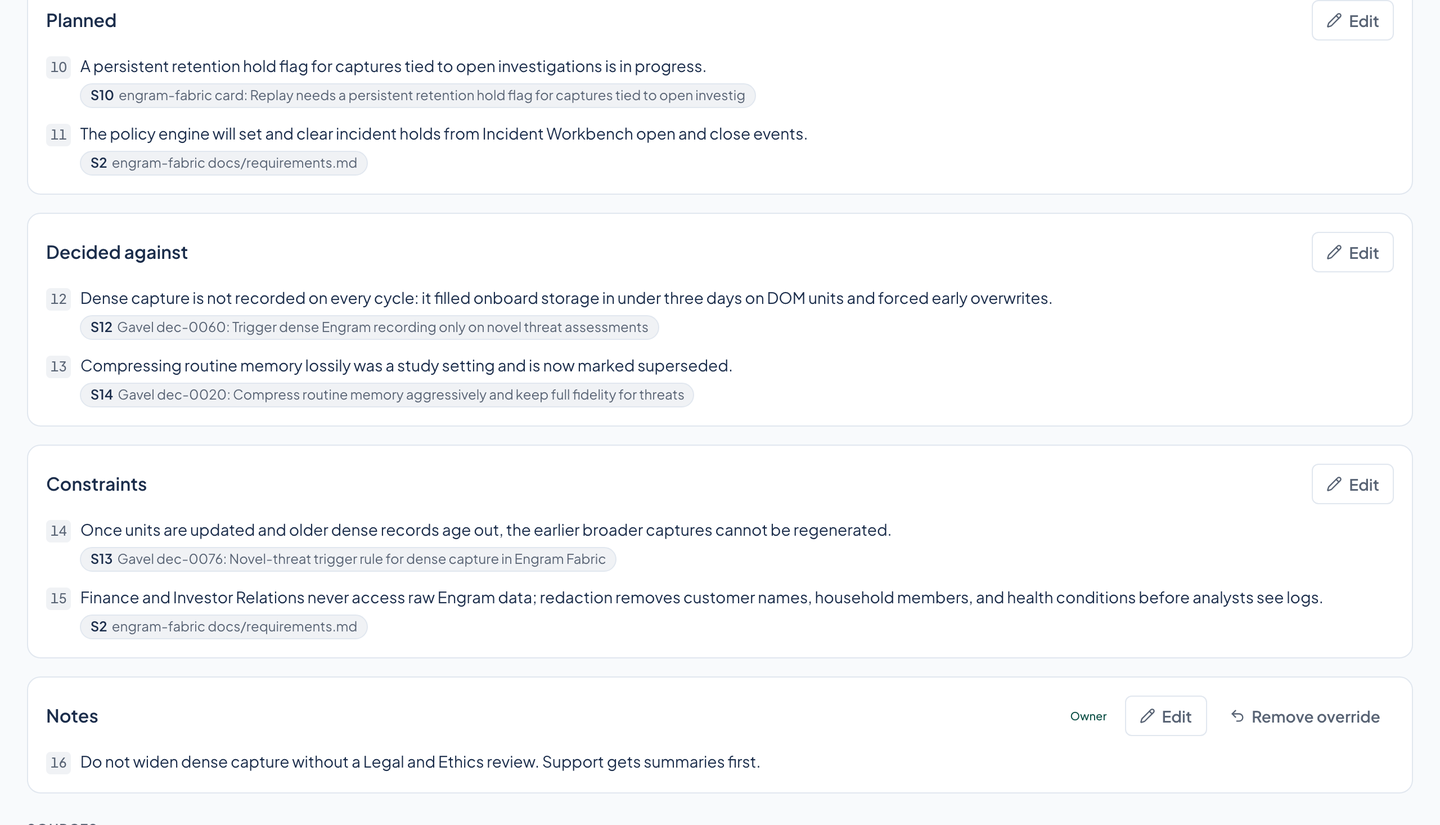
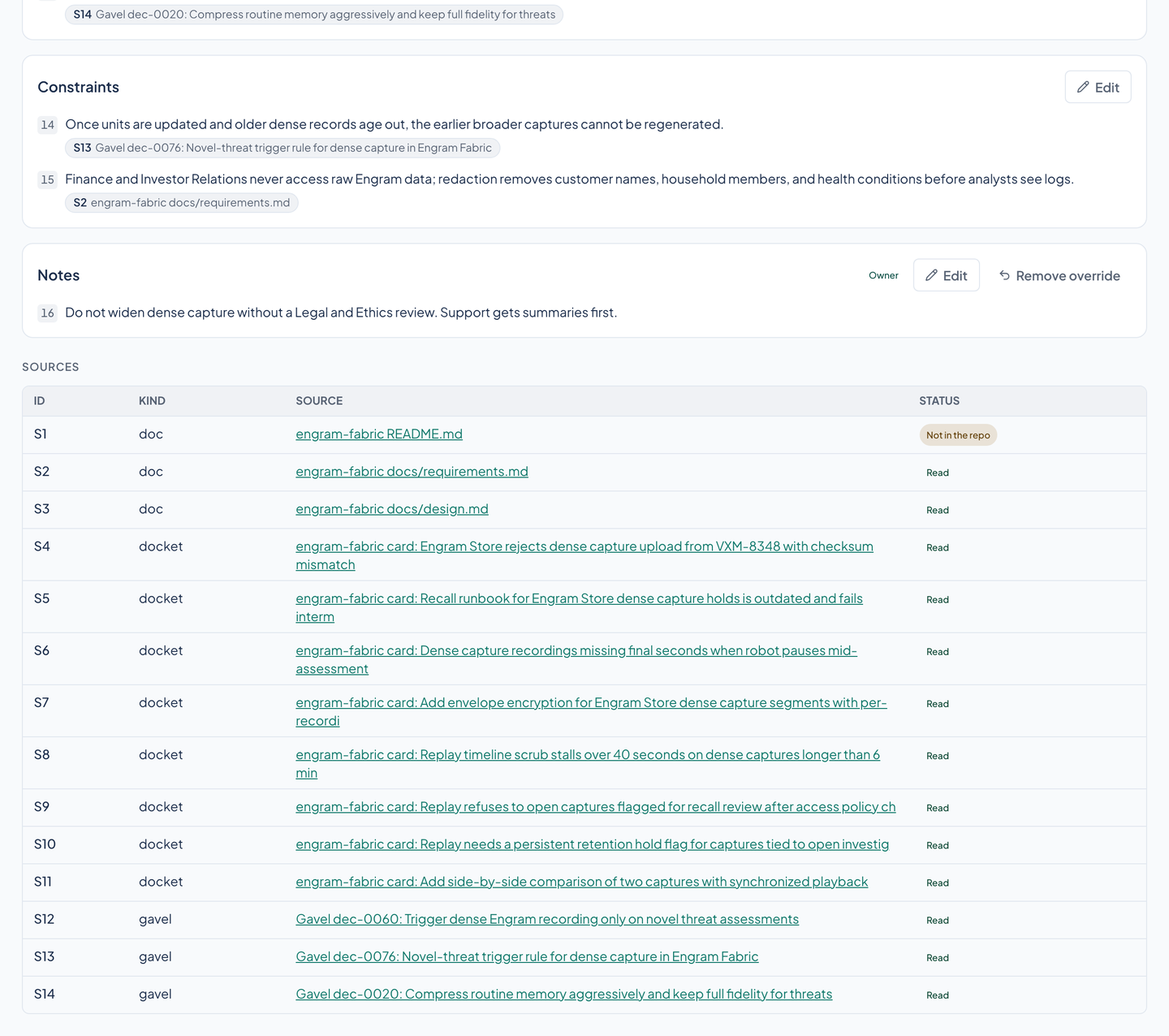
The lower sections of a CARA product profile: Planned, Decided against, Constraints, and a Notes section marked Owner.The lower sections of a CARA product profile: Planned, Decided against, Constraints, and a Notes section marked Owner.
What is planned, what was already settled, the constraints, and a note written by the person who owns the product's profile.

Sources

The Sources table of a CARA product page: fourteen sources, one README marked Not in the repo.The Sources table of a CARA product page: fourteen sources, one README marked Not in the repo.
Every document, card, and decision a build read, and whether each was read or missing from the repository.

The scope mirror

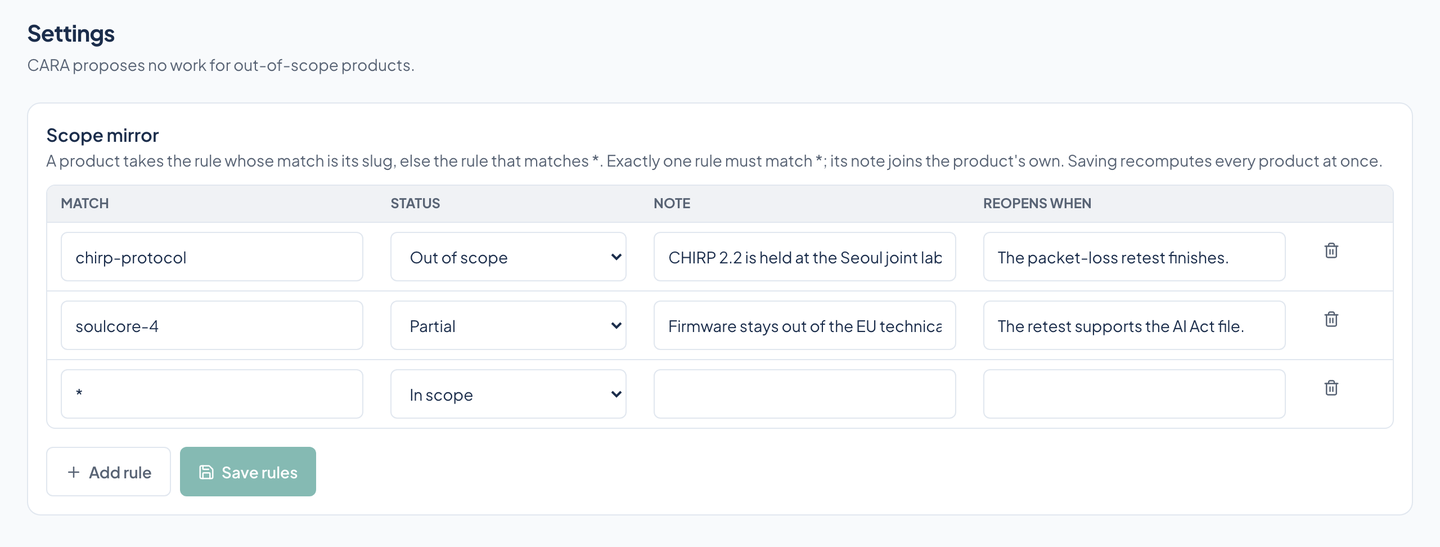
CARA's Settings page: the scope mirror with three ordered rules and Add rule and Save rules buttons.CARA's Settings page: the scope mirror with three ordered rules and Add rule and Save rules buttons.
Ordered rules that decide which products are in scope, partly in scope, or out, each with a note and when it reopens.